Right now, you could be in London, New York, or Sydney. You might be asleep, scrolling on your phone, or making coffee.
I’m standing in my room. Eyes open. Holding two brass dowsing rods.
There is no treatment table, no Zoom call, and no request for you to close your eyes and picture a white light. Yet your energetic imprint is right here in front of me, fully accessible, ready to be mapped.
If physical distance isn't what's separating us, what does remote energy healing actually mean?
Working With the Double
Before a single rod moves, I don’t jump into anyone's space uninvited. The work starts with your explicit consent, followed by an immediate check with your Higher Self. If that permission comes back denied, the session ends before it even begins.
Once approved, I connect through the crown chakra to access your energy field on the mental plane. That brings your etheric double straight into my working space. The etheric double is simply you, expressed in subtle energy rather than physical matter: the exact nonphysical counterpart to your body. I am not visualizing you from memory or staring at a photograph until something clicks. The subtle body is right here.
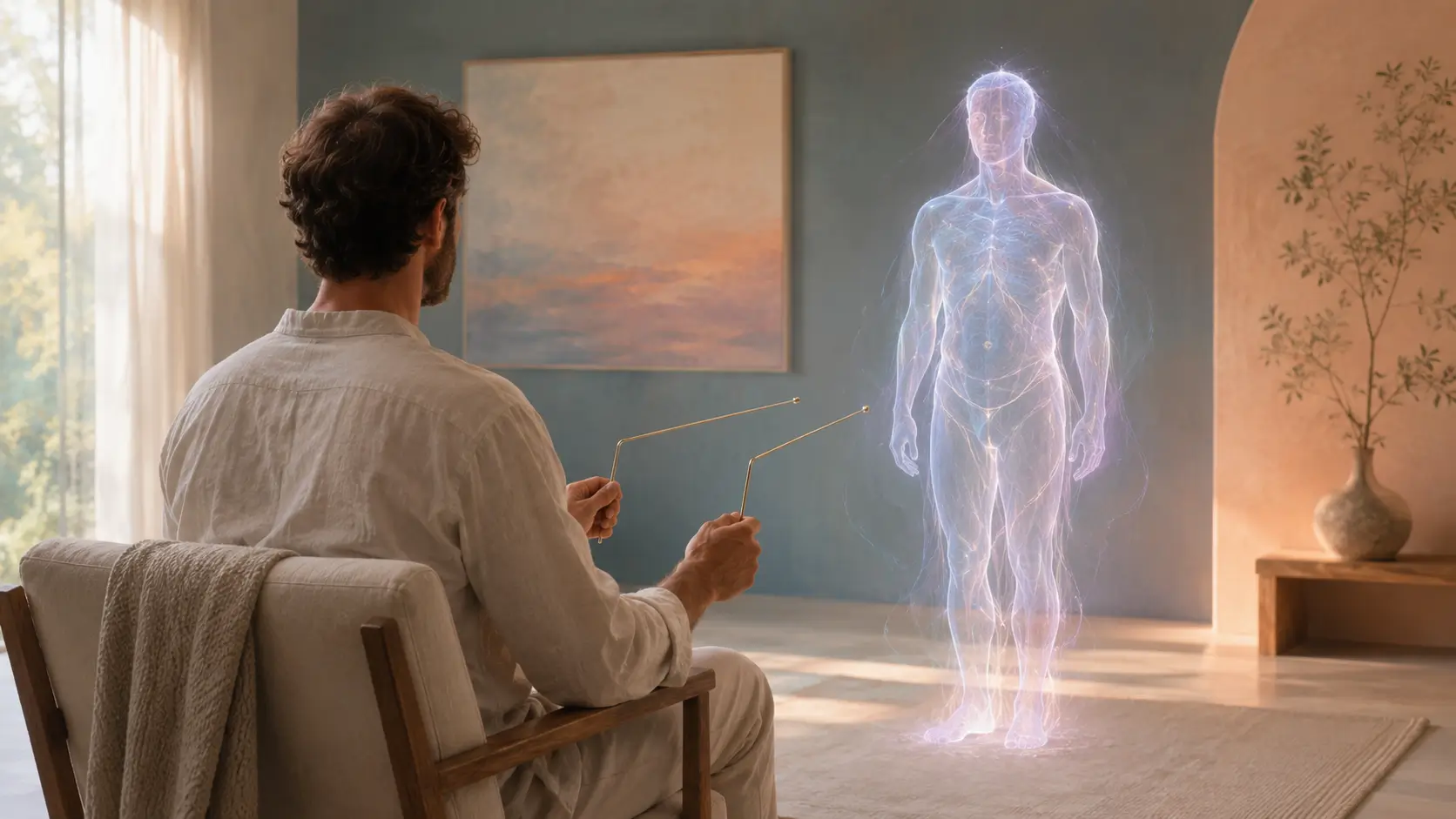
I examine it as I would a person standing in the room: checking chakras and meridians, measuring energy capacity, verifying polarity, and scanning for outside disturbances. I use brass dowsing rods for a precise physical response, while other practitioners might rely on clairvoyance or direct perception.
But the rods aren't reaching across an ocean, and they don't create the link. They’re just an instrument responding to fluctuations in your energy field.
Crucially, reading a field and changing it are different skills. Finding a blocked chakra doesn't open it. Spotting a curse doesn't clear it. In my work, radiesthesia reveals what’s actually there. Reiki gives me the capacity to alter what I find.
My setup is just one door into an old conversation. Persian thinkers spent centuries exploring this exact space, where real form exists without physical matter. Henry Corbin eventually gave that realm a name: the mundus imaginalis.
The Eighth Climate
Persian metaphysics describes an intermediary world between physical reality and pure spirit: ʿālam al-mithāl, the world of forms. Here, bodies, landscapes, colors, and beings exist in recognizable form without a grain of matter.
The twelfth-century Persian mystic Suhrawardi placed this realm at the heart of his cosmology. Centuries later, French philosopher Henry Corbin brought these traditions into Western thought, naming it the mundus imaginalis.
Corbin also called it the “eighth climate.” Ancient Greek and Islamic geography divided the physical Earth into seven regions. The eighth wasn't on any map. It was a different plane of existence, reached through consciousness rather than travel.
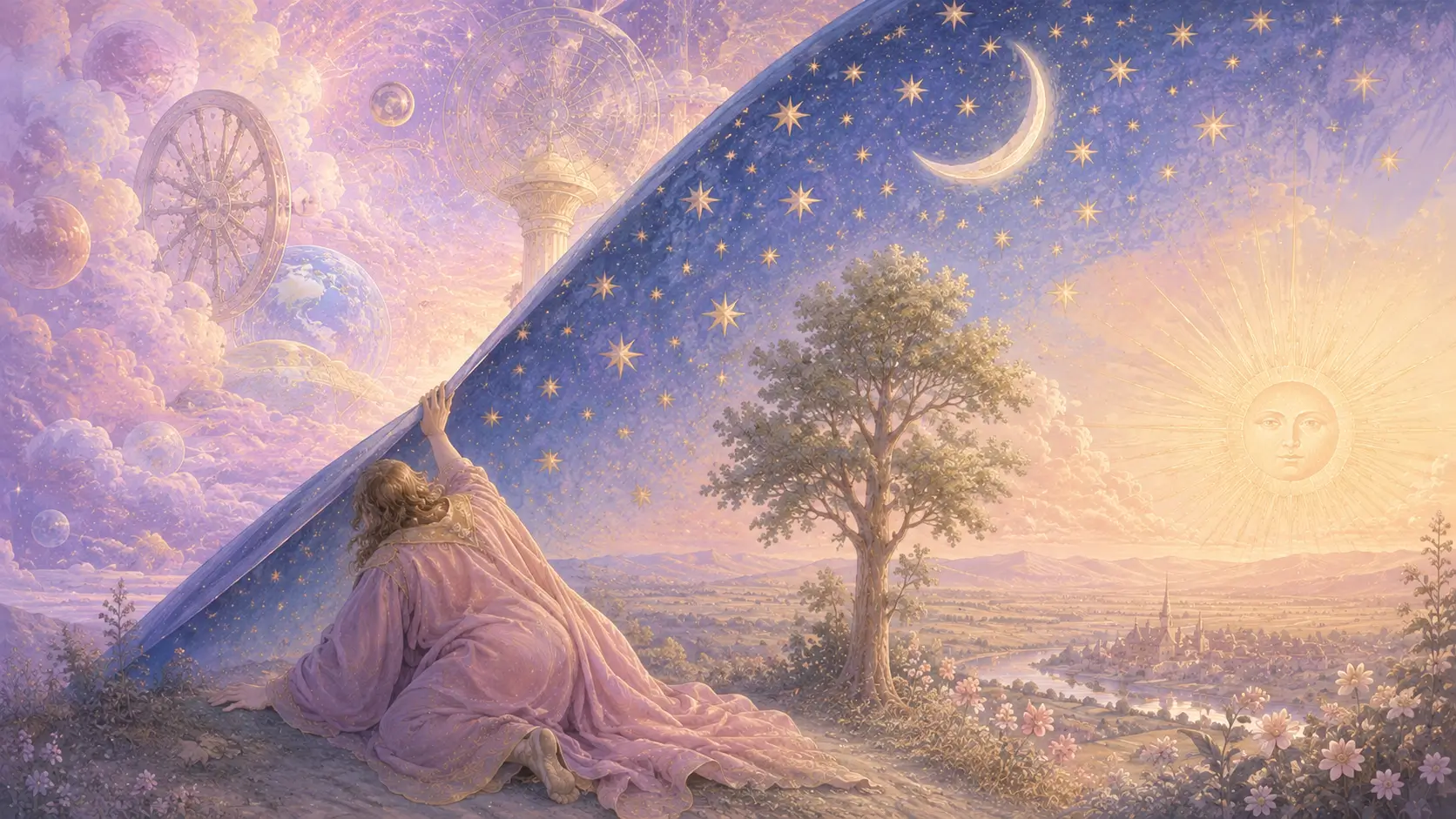
The term imaginal isn't ordinary imagination. It names a specific channel of perception where nonphysical realities take recognizable form. The image isn't a substitute for what you're looking at; it's the form through which that reality becomes available to consciousness.
A Body Behind the Body
Ideas of subtle bodies go back thousands of years. Indian traditions used terms like sūkṣma śarīra and liṅga śarīra for aspects of human existence beyond the physical.
In the late nineteenth century, Helena Blavatsky’s Theosophy organized these concepts into physical, etheric, astral, and mental bodies.
Annie Besant and C. W. Leadbeater used the term etheric double for the subtle form closest to the physical body. Beyond it came the astral body, associated with emotion and desire, and the mental body, tied to the mental plane of thought and consciousness.
In Thought-Forms, Besant and Leadbeater describe focused thought taking definite form and reaching another person.
The concept of a second body didn’t stay confined to formal occult anatomy. Carlos Castaneda later approached it from a completely different angle: through dreaming, perception, and what Don Juan called the second attention.
The Dreaming Body: A Second Form Built Through Attention
Carlos Castaneda’s books take the idea of a second body in a different direction. Through the teachings of Don Juan Matus, Castaneda describes the dreaming body (also called the double) as an energetic form developed through the second attention.
This state shifts perception away from daily habits into another layer of being, where you perceive energy directly. The dreaming body develops inside that altered awareness. Castaneda describes it as an energetic configuration with its own presence and mobility, capable of sensing and acting beyond the physical body.
In Don Juan’s system, attention is far more than concentration. Where attention goes, reality changes. Stay grounded in the physical world and its rules apply. Move into the second attention and a different reality opens up.
Theosophy focused on subtle anatomy; Castaneda, on awareness. The language changes, but both place human presence beyond the limits of the physical body.
The Witness: Names, Photos, and Personal Objects
Castaneda emphasized attention. Radiesthesia and radionics took a more physical approach: names, photographs, maps, and personal objects.
In the early twentieth century, French priest Abbé Alexis Mermet became one of the best-known practitioners of teleradiesthesia, which is radiesthesia performed at a distance. He worked using maps, photos, and details for distant people or places. The object on his desk didn't contain the subject; it gave his focus a precise target.
Radionics built on this through what practitioners call a witness: a photograph, handwriting, a strand of hair, or a drop of blood. It wasn't just a mental reminder of the client. It functioned as a direct energetic connection.
The logic goes back centuries. James Frazer framed it through two principles: similarity and contagion. An image links to what it resembles, while something that once touched a person, like hair, nails, or clothing, holds a connection after separation. People understood long before radionics that physical distance means nothing once contact is established.
None of this makes a photograph or hair sample mandatory; intention alone can establish the connection. Still, traditions separated by time and place kept doing the same thing: using physical objects to anchor a connection that isn't physical at all.
Connecting to someone is only the first step. Radiesthesia can show you the blockage, imbalance, or outside disturbance; clearing it requires healing abilities.
What Actually Heals?
Reiki is often described as hands-on healing, but the hands are only one way of applying it. In the Usui Reiki Ryoho lineage I practice, I don't create the healing energy. Reiki is the force; I simply direct it where it's needed.
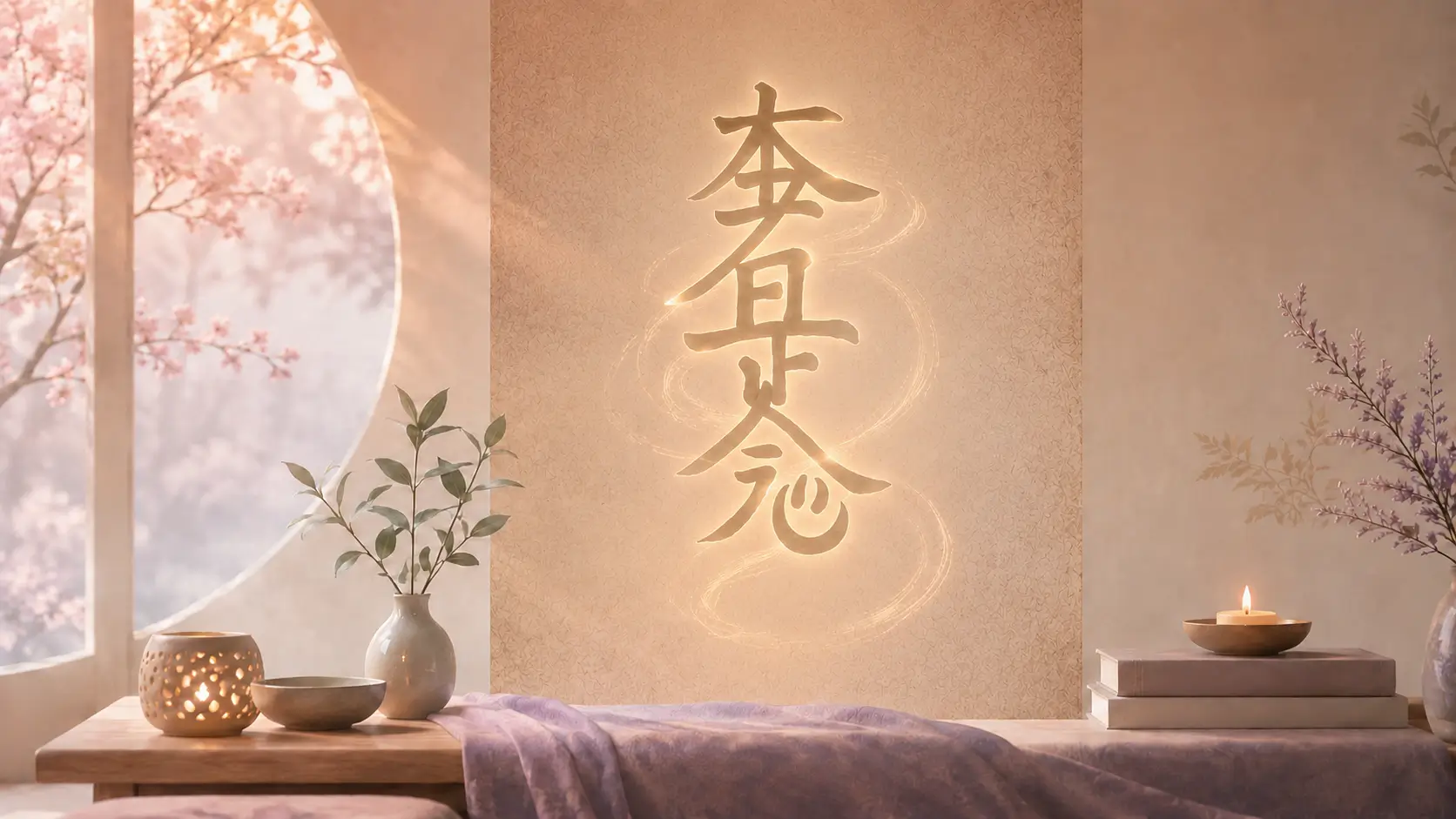
At Okuden, the second level, we work with symbols that sharpen focus. Among them is Hon Sha Ze Sho Nen, traditionally associated with healing across distance.
Its popular Western name, the “distance symbol,” doesn't do it justice. The older Japanese teaching reveals something far deeper: Hon Sha Ze Sho Nen points toward the right mind, a state where the boundary between self and others dissolves.
This brings us straight back to the mental plane. The systems use different language but meet at the same point: consciousness can reach an energetic structure without crossing physical space.
Once that access exists, Reiki acts directly on the energetic body, restoring flow, feeding depleted areas, opening blocked channels, rebalancing chakras, and clearing disturbances.
Beyond the Illusion of Distance
Instinct tells us cause and effect require direct contact: touch it, push it, or leave it alone. In remote work, physical distance binds solid matter, while consciousness passes right through it.
Nature’s Memory
In the 1980s, Cambridge biologist Rupert Sheldrake proposed something radical: nature runs on habits, not fixed laws. He called it morphic resonance.
In his model, similar systems influence each other across space through an underlying field. Connection depends on alignment, not distance.
To test it, he tracked a terrier named Jaytee and his owner, Pam. Jaytee had an uncanny habit of sitting at the window the exact moment Pam decided to head home. Sheldrake set up randomized tests, sending Pam home at unpredictable times in unfamiliar cars or on foot. Out of dozens of filmed trials, Jaytee waited by the window 4% of the time while Pam ran ordinary errands. The second Pam made the mental call to return, regardless of distance, that number jumped to 55%. The dog responded directly to her decision.
The Polygraph and the Plant
Then there's Cleve Backster, the CIA's top lie detector expert. In 1966, late one night, he attached polygraph electrodes to an office plant just to see if watering the roots changed its electrical resistance. The pen started drawing patterns that mirrored human emotional stress.
Backster decided to push it. He pictured burning a leaf. No words, just a vivid, deliberate intention to burn it. The pen instantly spiked across the paper.
He later tried it with living human white blood cells. He extracted cells from volunteers, kept them alive in test tubes miles away, and wired them to monitors. When the donors experienced sudden shock, like watching violent film clips, their separated cells miles away spiked at the same microsecond. Physical tissue split across town, but the connection never broke.
Global Flips of a Coin
Leave it to Ivy League researchers at Princeton University to build high-tech machinery just to prove what an office plant already figured out.
With the Global Consciousness Project, they placed digital coin flippers in cities worldwide. Left alone, these boxes spit out a flat, random 50/50 stream of ones and zeroes. That randomness broke whenever the whole world tuned into the same event.
During Princess Diana’s funeral, the Olympics, and September 11, isolated boxes on different continents synchronized. Collective focus on a single moment physically altered probability across the planet.
Your Heart Knows No Distance
Physical proximity is not a requirement for human energy. An energetic field has no zip code, and intent does not lose voltage over miles. In remote energy healing, no signal is traveling across state lines. The field is already everywhere at once.
In-person sessions rely on sight, touch, and setting. Distance healing bypasses those sensory distractions, leaving only clear focus and resonance.
Thinking about exploring distance healing? Do your homework, but trust your heart above all else. Don't force a fit with a practitioner or method that feels off. Pick someone whose approach naturally aligns with where you are, and let your intuition guide the choice.